Diwali prompts by age
“Use this prompt” fills in the generator and sets the detail level. Every page is drawn fresh, so if one misses, change one detail and try again.
| For | Prompt | Action |
|---|---|---|
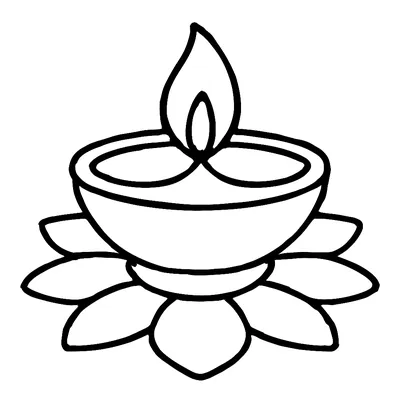
| Ages 2 to 5Simple | a lit diya, a small clay oil lamp with one flame, on a simple flower pattern, big simple shapes, no background One lamp on a flower: a first Diwali page with only a few shapes. |
|
| Ages 5 to 8Simple | a row of five lit diyas on a step, each lamp with a different simple pattern, big simple shapes, no background A row of lamps, as in the name Diwali (see below), each with a pattern of its own. |
|
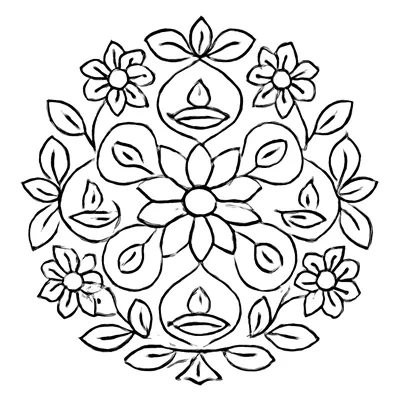
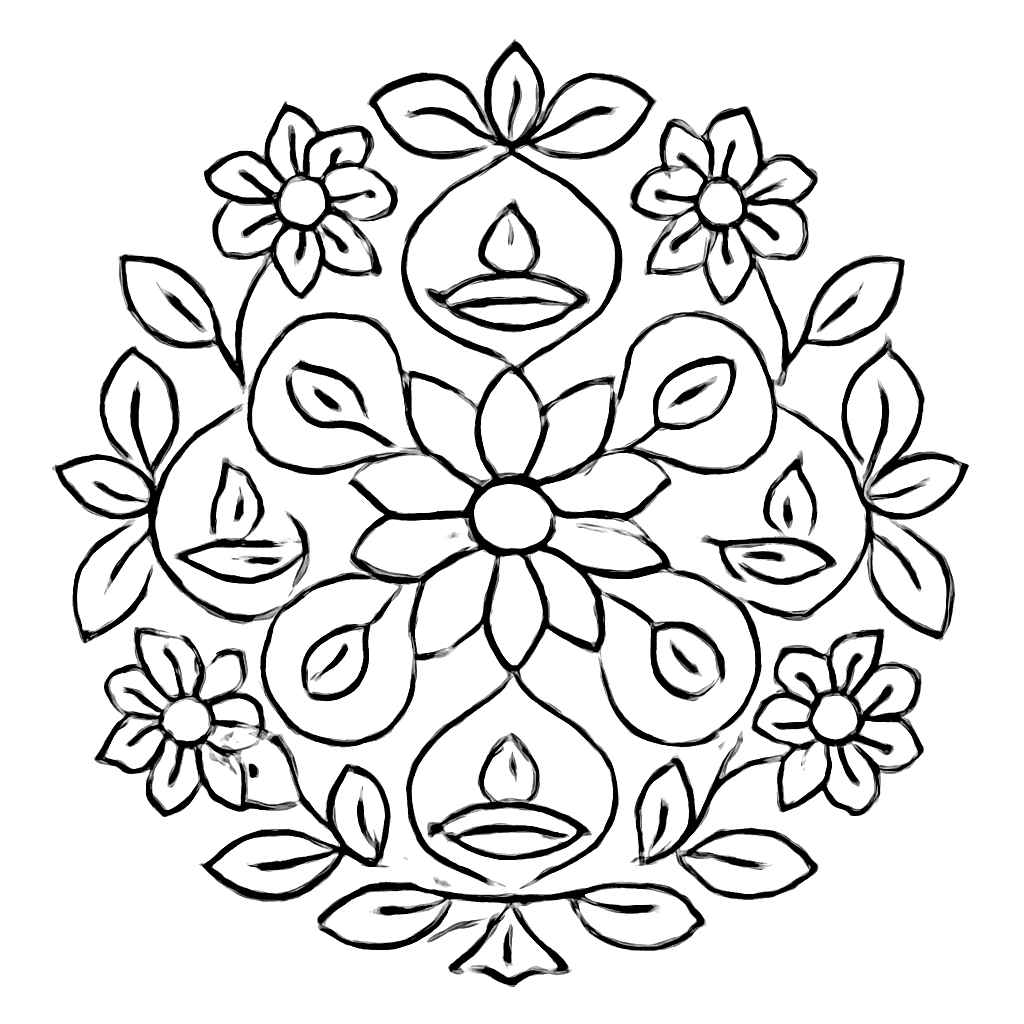
| Ages 6 to 9Medium | a round rangoli design of flower petals, leaves and small diyas, symmetrical, clean bold outlines A symmetrical design that children color ring by ring. |
|
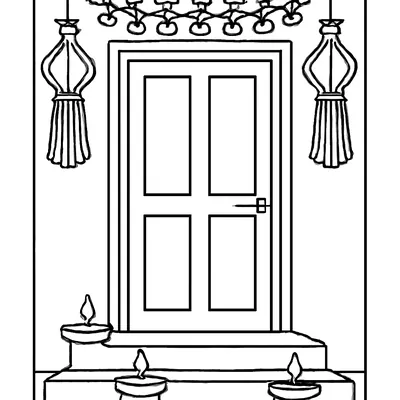
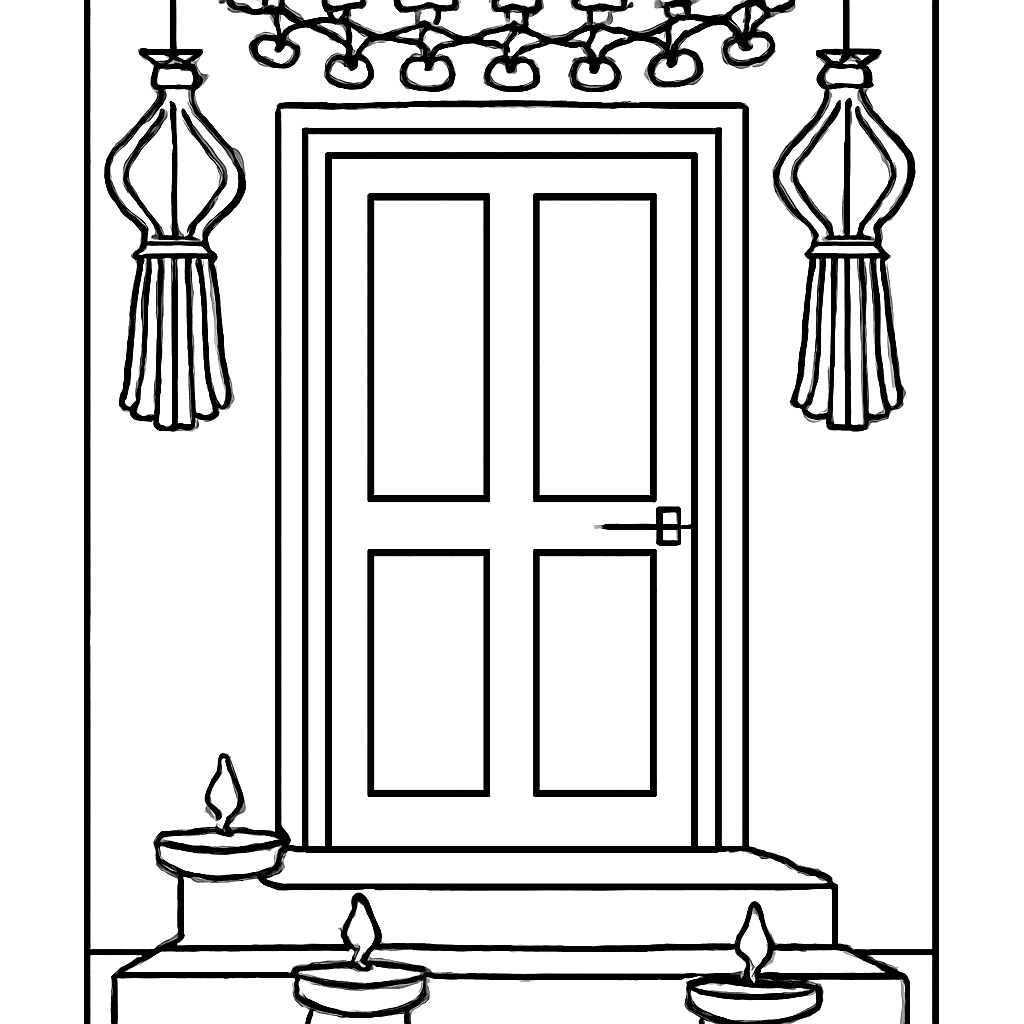
| Ages 9 to 12Medium | a doorway decorated for Diwali with hanging paper lanterns, a string of marigold flowers above the door and diyas on the steps, no people, clean bold outlines A whole doorway to decorate: lanterns, flowers, lamps and the door itself. |
|
| Teens and adultsMedium | a kolam pattern of dots joined by looping lines into a symmetrical design, white background, clean bold outlines Kolam, the dot-and-line floor art of Tamil Nadu, makes a calm page with many small shapes (see below). |
How to color a rangoli
Rangoli is floor art made at the doorways of homes, and in more elaborate forms for festivals, across India. The word comes from the Sanskrit rangavali, “line of color”, and rangolis are made with colored powders, rice flour, flowers, chalk or colored sand. For Diwali they are especially elaborate, with lit lamps set among the colored lines. In Tamil Nadu the same art is called kolam, and it is mostly white, made with rice flour or chalk (Britannica).
- Work from the center out. Give each ring its own color before moving to the next, so the symmetry shows.
- Repeat the colors. Color one petal, then every matching petal the same way, as in a mandala.
- Try a kolam in white. Color the space around the pattern in one dark color and leave the pattern white, like rice flour on a doorstep.
A row of lamps for a class display
The name Diwali comes from the Sanskrit dipavali, “row of lights”. Diyas, small earthenware lamps filled with oil, are lit and set in rows along the parapets of temples and houses (Britannica). A class display can follow the name: every child colors a diya page, and the pages go up side by side in one long row along a wall or a window.
What Diwali celebrates
Diwali is one of the major festivals of Hinduism, Jainism and Sikhism. It lasts five days, usually in late October or November, and generally symbolizes the victory of light over darkness. Homes are decorated and floors inside and out are covered with rangolis. For Jains the festival commemorates the liberation of Mahavira, and since the 18th century Sikhs have celebrated it as the time of Guru Hargobind's return to Amritsar from captivity (Britannica).
Many people clean their homes before Diwali, wear new clothes and give gifts of sweets to family and friends (timeanddate.com). Each of those makes a page: a plate of sweets, a family lighting lamps on the steps, a freshly decorated doorway.
Diwali 2026: Sunday 8 November
The Government of India's list of holidays for 2026 puts Diwali (Deepavali) on Sunday 8 November, and so does timeanddate.com. The date can differ by region, because traditional lunar calendars are read in different ways; in Tamil Nadu, for example, Deepavali falls in the Tamil month of Aipasi (timeanddate.com). In 2027, Diwali falls on Friday 29 October.