Fall prompts by age
“Use this prompt” fills in the generator and sets the detail level. Every page is drawn fresh, so if one misses, change one detail and try again.
| For | Prompt | Action |
|---|---|---|
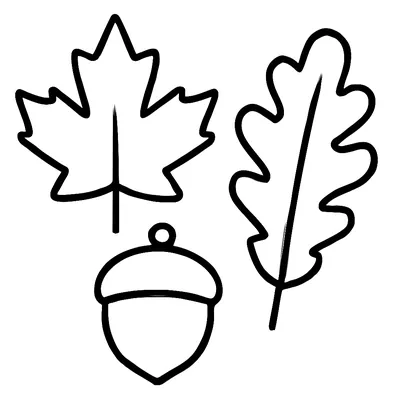
| Ages 2 to 5Simple | a maple leaf, an oak leaf and an acorn, big simple shapes, no background Three things children pick up on a walk, each one a single large shape. |
|
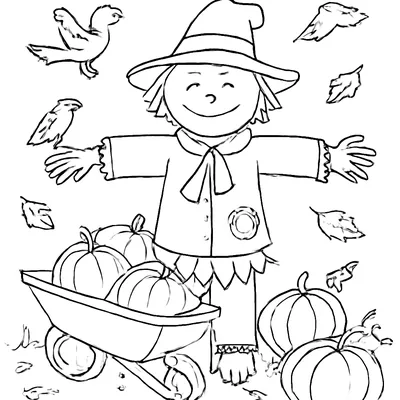
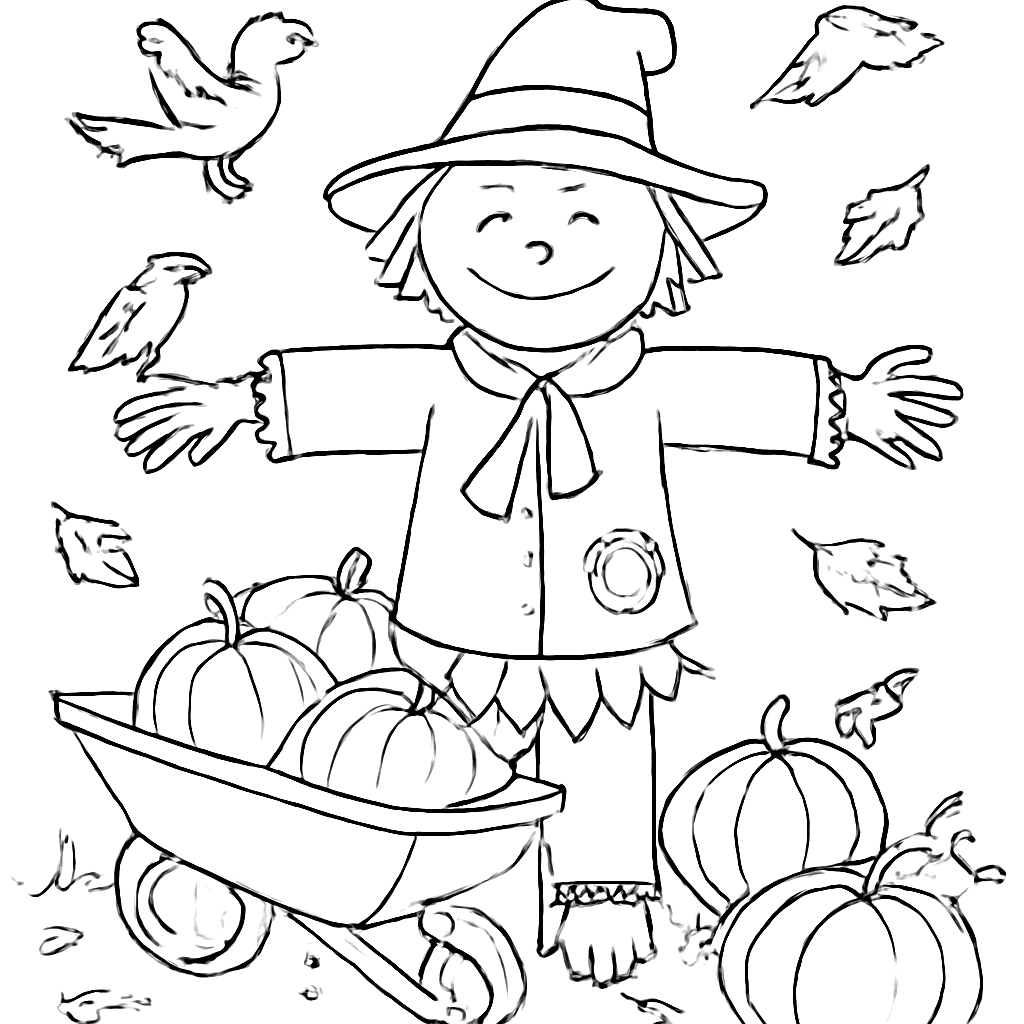
| Ages 6 to 9Medium | a friendly scarecrow in a pumpkin patch with a wheelbarrow of pumpkins and leaves falling, crows drawn as outlines A busy farm scene with a friendly face. Outlined crows stay white instead of printing as black shapes. |
|
| Ages 6 to 9Medium | a hedgehog and a squirrel gathering acorns under an oak tree Two animals getting ready for winter, which gives a science lesson something to color. |
|
| Ages 9 to 12Medium | five different tree leaves in a row: maple, oak, ginkgo, birch and sweetgum, each with an empty label box under it A leaf identification sheet. Children write the names in the boxes, so the generator never has to spell them. |
|
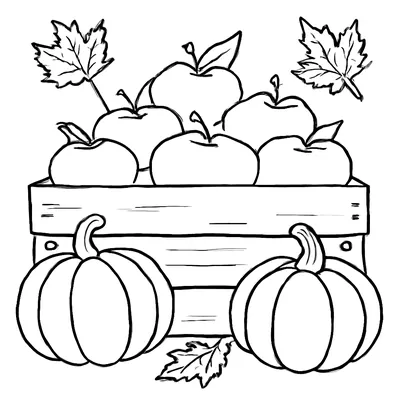
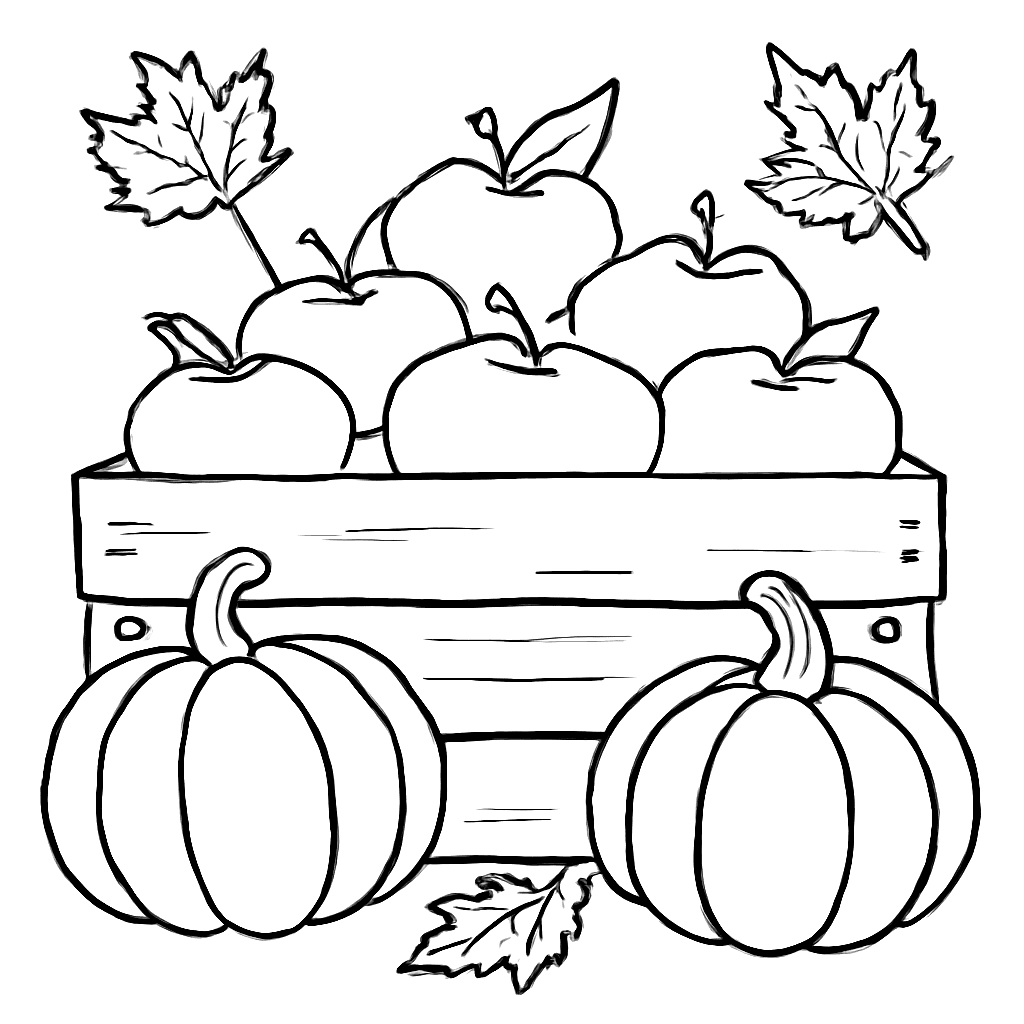
| Teens and adultsMedium | a wooden crate full of apples with pumpkins, gourds and maple leaves around it, clean bold outlines A harvest still life with dozens of separate shapes to fill. |
Fall pages by age
| Ages | Subjects that work | Level |
|---|---|---|
| 2 to 5 | one leaf, an acorn, a pumpkin, an apple | Simple |
| 6 to 9 | scarecrows, pumpkin patches, animals storing food | Medium |
| 9 to 12 | leaf identification sheets, orchards, a hayride | Medium |
| Teens and adults | harvest still lifes, porches, leaf mandalas | Medium |
Fall pages also bridge the season's holidays. Pumpkins without faces work from September to the end of November, while Halloween pages and Thanksgiving pages each have their own few weeks.
A leaf walk that ends in coloring pages
Collecting leaves gives children a reason to look closely before they color.
- Collect. On a walk, each child picks three or four leaves of different shapes. Flat, dry leaves keep best.
- Match. Print the leaf identification prompt above, let children find their leaves on the sheet and write the names in the boxes.
- Color from life. Lay the real leaves next to the page and copy their colors, including the spots and the edges that turned first.
- Rub. Very young children can put a leaf under thin paper and rub a crayon over it, then color a page of the same leaf.
Why leaves turn yellow, orange and red
Leaves are green because of chlorophyll. Before they fall, trees break the chlorophyll down and take back much of the nitrogen in it. Yellow and orange pigments, the carotenoids, are in the leaf too, and some of them stay after the green has gone. Red is different: it comes from anthocyanins, which many trees make just before their leaves fall. At the Harvard Forest in Massachusetts, about 70 percent of the shrubs and trees produce them (Harvard Forest).
That makes a good coloring lesson: hand out only yellow and orange first, then add red and purple once children have heard where those colors come from.
When fall starts and ends
Weather forecasters count fall as September, October and November. Astronomers start it at the September equinox, when the sun passes directly over the equator, and end it at the winter solstice in December (NOAA). Either way, fall pages stay in season until December, when winter coloring pages take over.