Halloween prompts by age
“Use this prompt” fills in the generator and sets the detail level. Every page is drawn fresh, so if one misses, change one detail and try again.
| For | Prompt | Action |
|---|---|---|
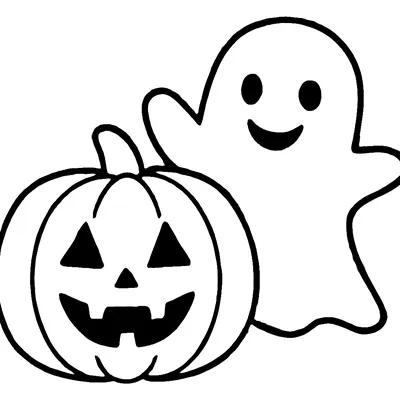
| Ages 3 to 5Simple | a smiling jack-o'-lantern with a friendly ghost beside it, big simple shapes, no background Big closed shapes are easy to stay inside, and “smiling” and “friendly” keep the faces soft. |
|
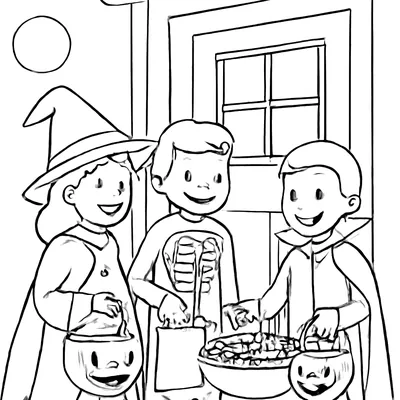
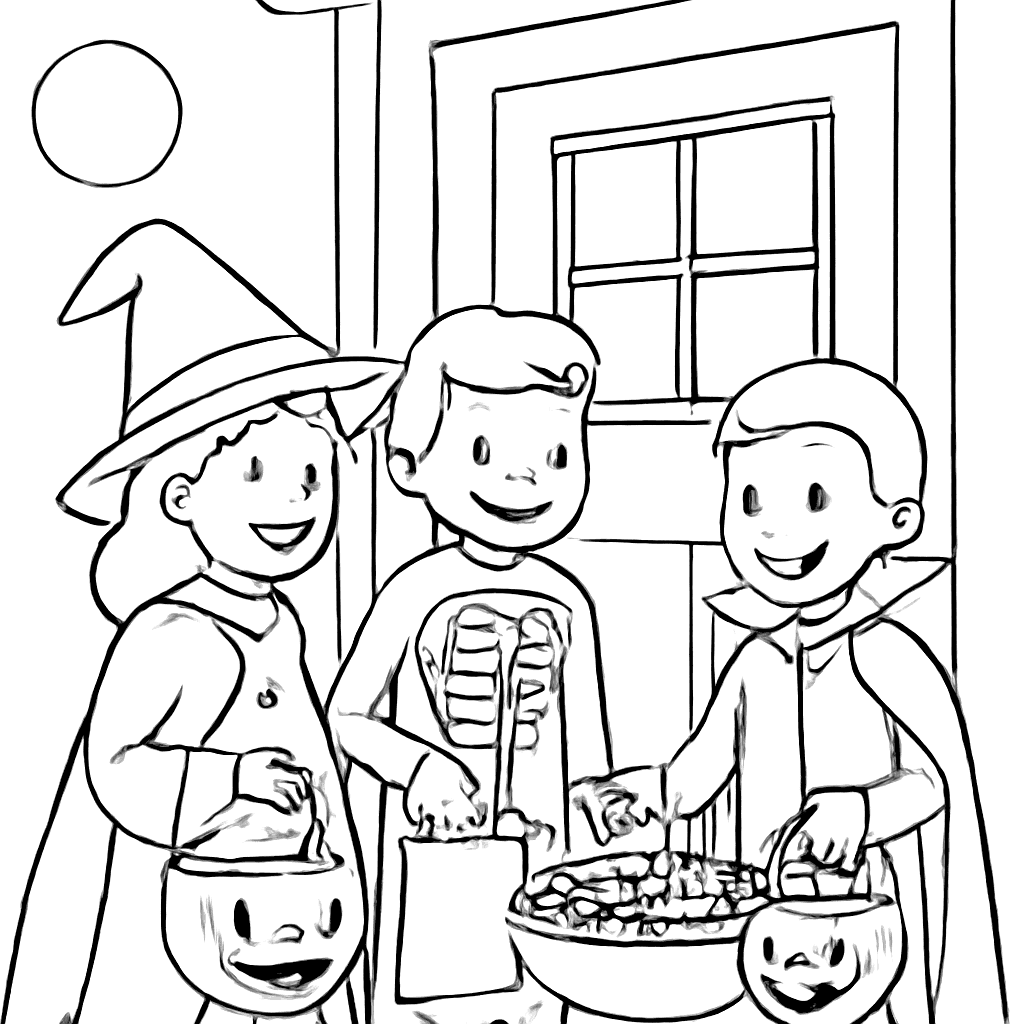
| Ages 6 to 9Medium | three kids in costumes trick-or-treating at a front door with a bowl of candy, full moon drawn as an outline Several characters hold attention longer, and an outlined moon keeps the sky white. |
|
| Ages 10 to 12Medium | a crooked haunted house on a hill with bats, cobwebs and a black cat drawn in outline Real spookiness for older kids. “In outline” stops the cat printing as a solid black shape. |
|
| Teens and adultsDetailed | an ornate Victorian haunted mansion with patterned roof tiles, a wrought-iron gate and twisted trees Architecture gives the dense, repeating detail adults like, without gore. |
|
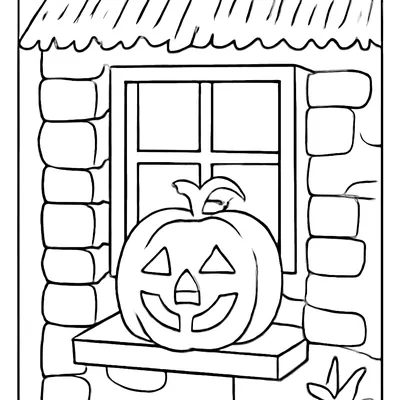
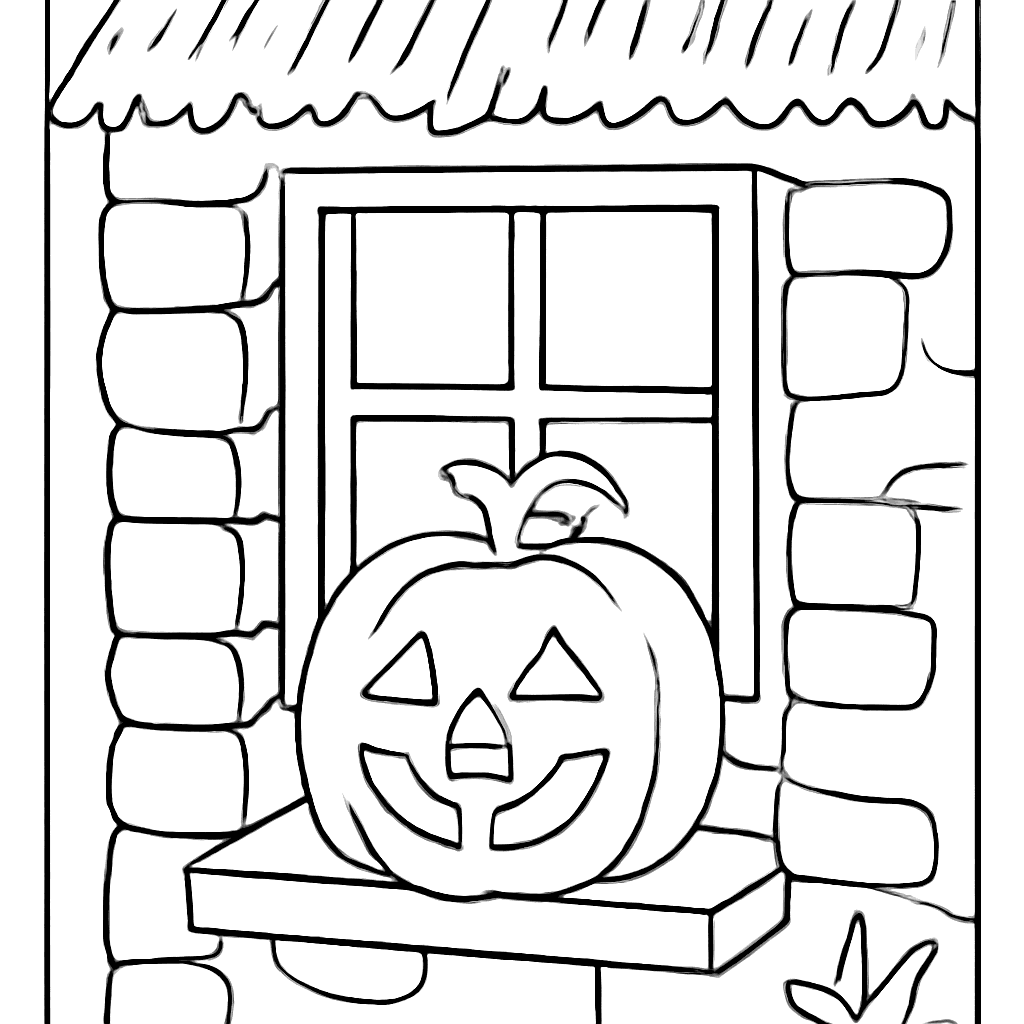
| History lessonMedium | a carved turnip lantern glowing on the windowsill of an old Irish cottage The first jack-o'-lanterns were turnips (see below), which gives a class something to talk about. |
Choose the scare level first
The theme stays the same from preschool to adulthood. What changes is how frightening the picture may be, and the words in your prompt set that more than the subject does: a skeleton can be a cartoon in a party hat or a grinning figure in a graveyard.
| Mood | Words to use | Ages |
|---|---|---|
| Friendly | smiling, cute, round, cartoon, party hat | 3 to 5 |
| Playful | costumes, trick-or-treat, candy, pumpkin patch | 6 to 9 |
| Spooky | crooked, moonlit, cobwebs, haunted, owls | 10 and up |
| Gothic | Victorian, wrought iron, ornate, gargoyles | Teens, adults |
Words such as zombie, blood, fangs or creepy push a page past what most young children enjoy. Look at the page on screen before you print a stack for a class.
Keep the night sky white
Halloween is full of black: night skies, black cats, bats, witch hats. On a coloring page a large solid black area is ink with nothing left to color, and heavy ink can wrinkle plain printer paper. The generator already asks the image model for black outlines on white, but a prompt that says “dark night” or “silhouette” pulls the other way.
- Write “full moon and stars drawn as outlines” instead of “dark night sky”.
- Write “black cat drawn in outline” so the cat becomes a shape to color.
- If a page still comes back with a filled sky, generate it again with “white background, outline only” at the end of the prompt.
Pages for a class party
Halloween falls on a Saturday this year (31 October 2026), so check whether your school marks it on Friday the 30th. Two set-ups work well:
- One design for everyone. Generate one page, check it and photocopy it. This is also the fair choice for a coloring contest, because every entry starts from the same picture.
- A different page per table. Six table groups need six designs. On the free plan (2 pages a day) that takes three days, so start early in the week, or make them in one sitting with Pro.
Día de los Muertos is a separate holiday
The Day of the Dead, as practiced in Mexico, welcomes back the souls of relatives who have died. It runs from the end of October into early November (UNESCO), which is why its decorated skulls, the calaveras, often turn up next to Halloween pages.
If you make calavera pages, present them as part of that tradition, with flowers, candles and an ofrenda (the home altar with offerings for the family's dead), rather than as a Halloween monster. For a lesson, a page with a family ofrenda gives students more to talk about than a skull on its own.
The first jack-o'-lanterns were turnips
In Ireland, lanterns were carved from turnips, because pumpkins are not native there. Irish immigrants carried the custom to North America, where pumpkins were plentiful, and the orange jack-o'-lantern took over (Clemson University Home & Garden Information Center). The last prompt in the table above draws a turnip lantern; make a pumpkin version too and let children compare.