Snowflake prompts by age
“Use this prompt” fills in the generator and sets the detail level. Every page is drawn fresh, so if one misses, change one detail and try again.
| For | Prompt | Action |
|---|---|---|
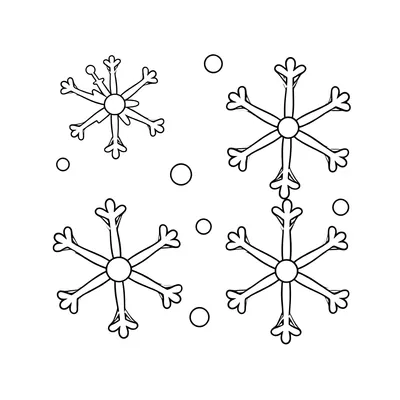
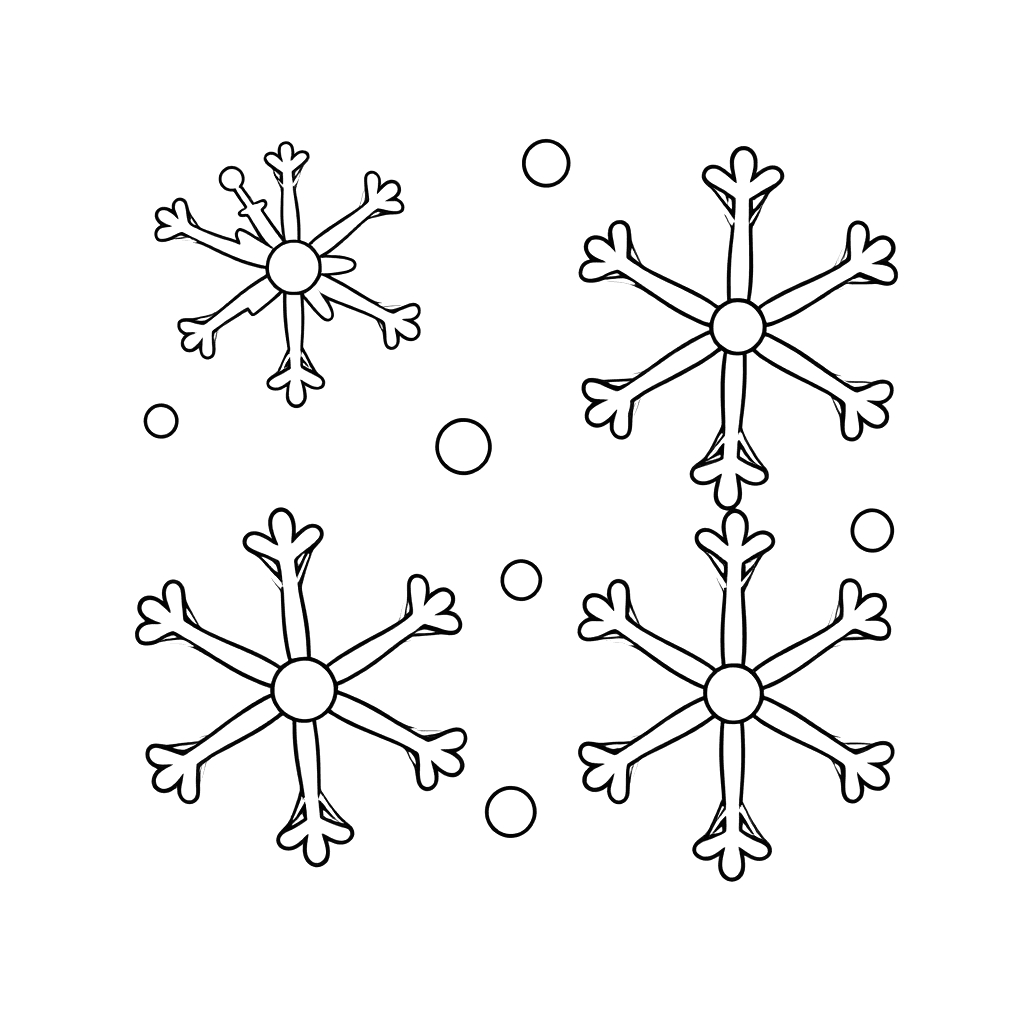
| Ages 2 to 5Simple | four snowflakes of different sizes with six short arms each, spaced apart with small dots between them, big simple shapes, no background Four separate shapes with plain arms. Each is small enough to finish in one go. |
|
| Ages 3 to 6Simple | one big snowflake with six thick arms and a star in the center, big simple shapes, no background One snowflake filling the page, with thick arms that are easy to stay inside. |
|
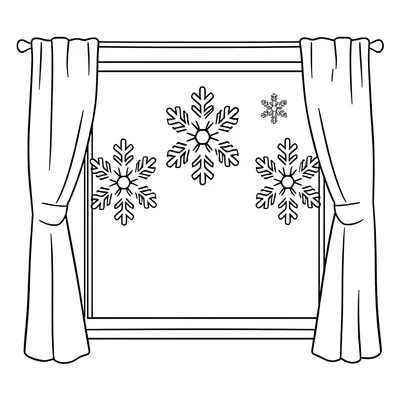
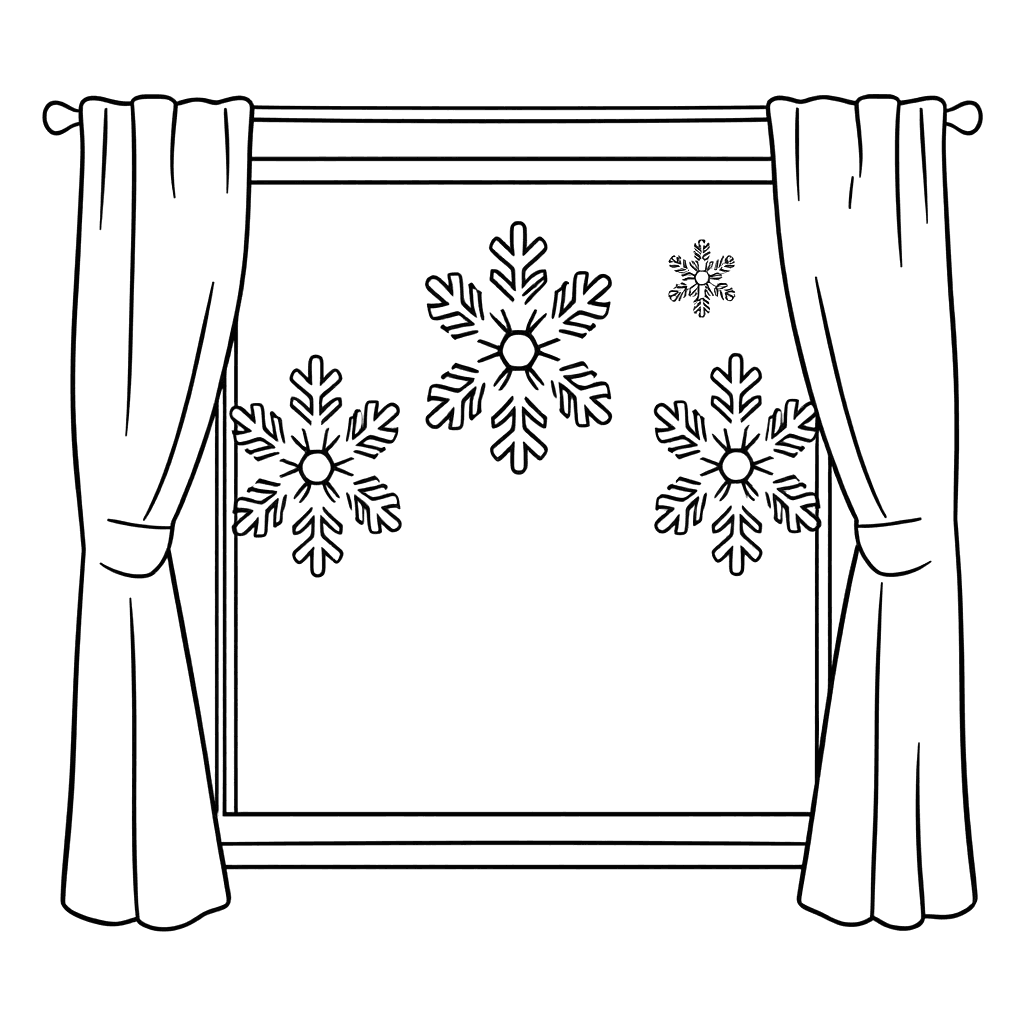
| Ages 6 to 9Medium | a window with curtains at both sides and snowflakes of different sizes on the glass, clean bold outlines A frame to color first, then snowflakes of different sizes. |
|
| Ages 9 to 12Medium | a large flat hexagonal snow crystal with a ring pattern and six arms, clean bold outlines A plate-type crystal, which pairs with the crystal types below. |
|
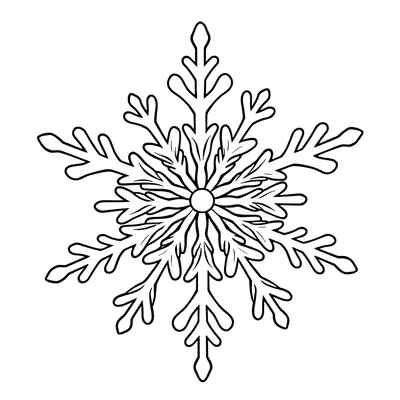
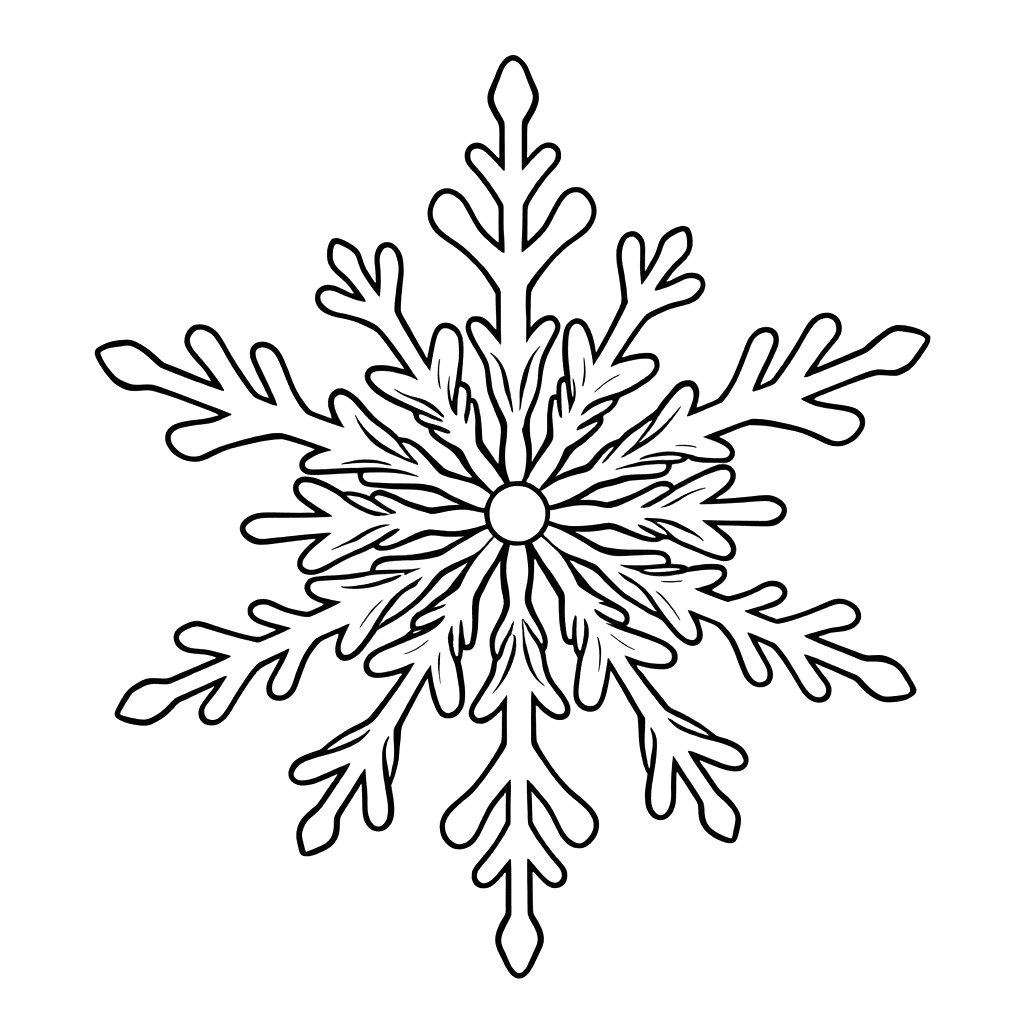
| Teens and adultsDetailed | one large snowflake with six long branching arms and many small side branches like a fern A branching snowflake gives long lines to color along, with symmetry to keep the eye moving. |
Not every snowflake is a six-pointed star
A snow crystal grows from a hexagonal ice prism, but not every one ends up looking like a star. SnowCrystals.com, run by the Caltech physicist Kenneth Libbrecht, names several basic forms. Each of them makes a different coloring page:
| Crystal | What it looks like | Ask for |
|---|---|---|
| Stellar dendrite | A star with branches and side branches, the most recognizable snow crystal | “six long branching arms with small side branches like a fern” |
| Stellar plate | A flat star with broad, plate-like arms | “a flat six-sided snowflake with a pattern in each arm” |
| Column | A hexagonal prism, small and easy to miss | “a six-sided column with flat ends” |
| Needle | A column grown long and thin | “thin ice needles in a cluster” |
| Capped column | A column with a plate on each end | “a six-sided column with a flat disc at each end” |
SnowCrystals.com also notes that not all snowflakes look like six-pointed stars, though many do, and that fernlike stellar dendrites are not perfectly symmetrical. For why so many have six, see winter coloring pages.
The man who photographed snowflakes first
Guinness World Records lists Wilson Bentley as the first person to photograph a single snow crystal. He took the picture on 15 January 1885 on his family's farm near Jericho, Vermont (Guinness World Records). Print the fern-armed snowflake and ask children to compare its branches with a photograph of a stellar dendrite online.
Fold a six-point paper snowflake
A snowflake on paper has six arms because you fold the paper into six layers:
- Start with a round sheet of paper: trace a plate and cut it out.
- Fold it in half, then fold the half into thirds, like a fan.
- Cut small shapes out of the edges, then unfold it.
Color the printed snowflake pages first, then cut out the snowflakes along the outline and hang them in a window.