Winter prompts by age
“Use this prompt” fills in the generator and sets the detail level. Every page is drawn fresh, so if one misses, change one detail and try again.
| For | Prompt | Action |
|---|---|---|
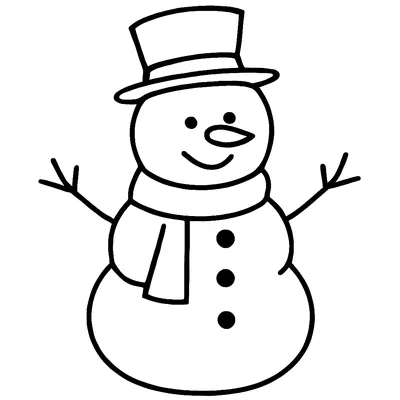
| Ages 2 to 5Simple | a smiling snowman with a scarf, a top hat and stick arms, big simple shapes, no background Three circles and a hat: the first winter page most children can color on their own. |
|
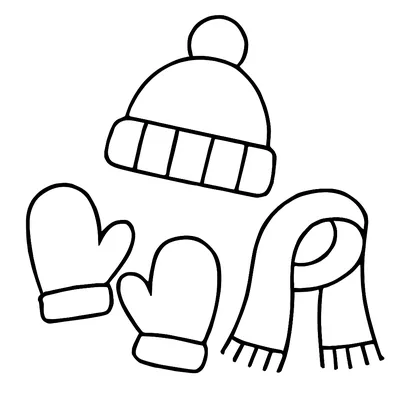
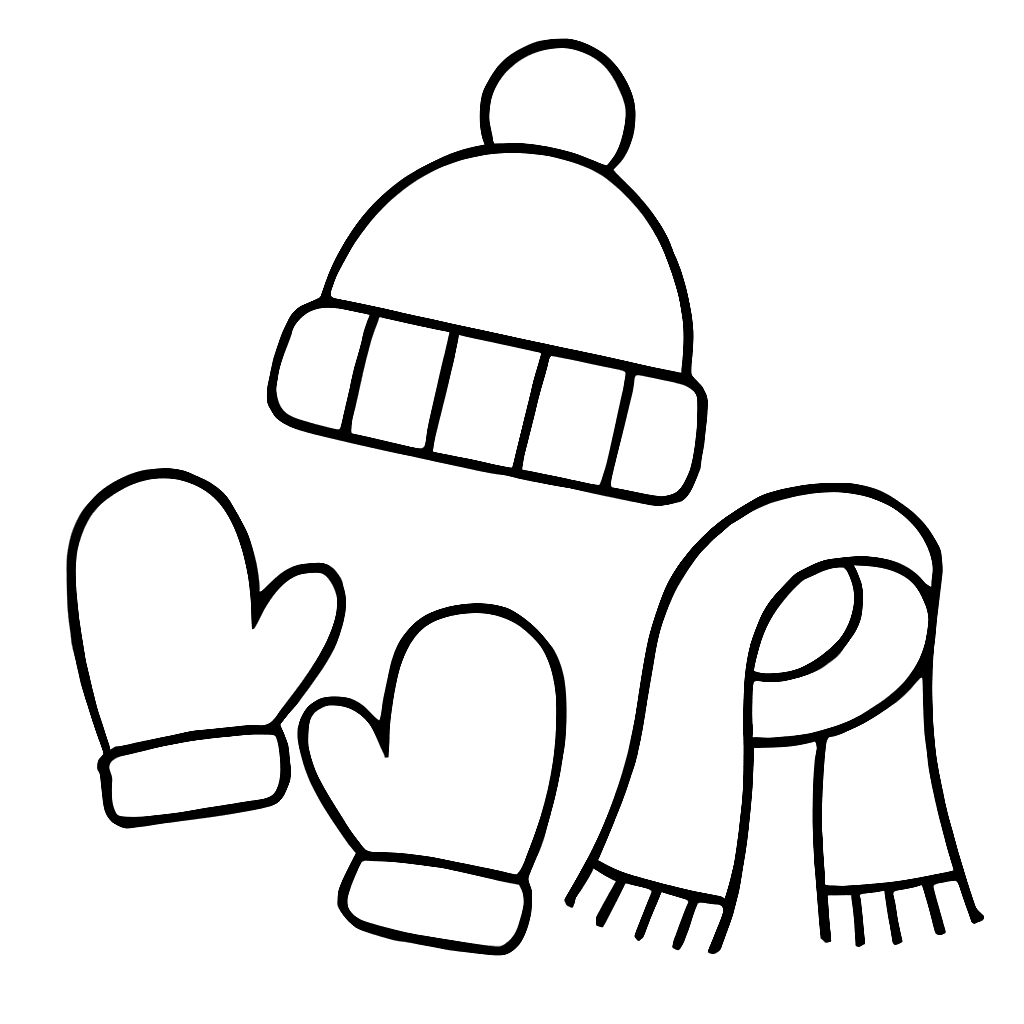
| Ages 2 to 5Simple | a pair of mittens, a wool hat and a scarf, big simple shapes, no background Clothes children wear every day, so they can copy their own colors. |
|
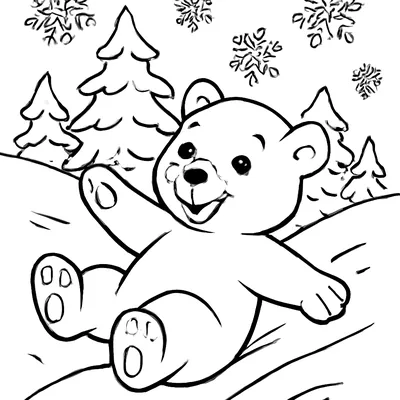
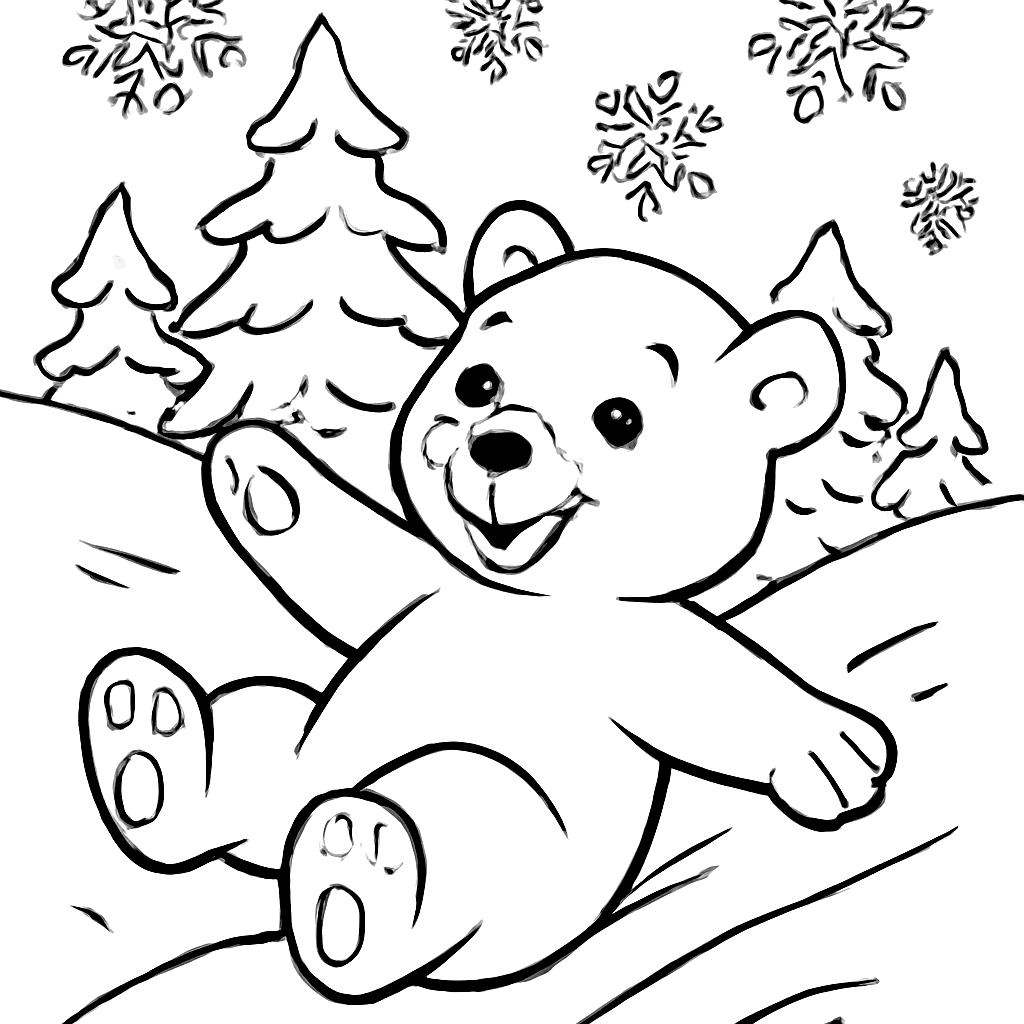
| Ages 6 to 9Medium | a polar bear cub sliding down a snowy slope with pine trees behind it, snowflakes drawn as outlines, clean bold lines A playful animal and a whole landscape, with the snowflakes kept as outlines so the sky stays white. |
|
| Ages 9 to 12Medium | a log cabin in a snowy pine forest with smoke curling from the chimney, clean bold outlines A quiet scene of logs, snow and trees that takes longer to color. |
|
| Teens and adultsMedium | a large snowflake with six identical arms made of simple geometric shapes, bold clean lines, white background A winter mandala: six identical arms for anyone who likes symmetrical patterns. |
A snow-day plan
When school is called off, a short plan keeps the day from turning into one long screen session. Make the pages the night before: two on the free plan, or the whole set with Pro.
- Morning: a snowman page for the youngest and a cabin or polar bear scene for older children.
- After lunch: go outside, then color a page of what you saw: tracks in the snow, a bird at the feeder, the snowman you built.
- Afternoon: a snowflake pattern to color slowly, with a mug of cocoa.
Why snowflakes have six sides
Every snowflake is a crystal of ice. As water freezes, its molecules bond into six-sided rings, and that hexagonal pattern carries on as the crystal grows, which is why snowflakes have six sides or six arms (Smithsonian Magazine). That gives a quick lesson for a snowflake page: count the arms before coloring, and color the same part of every arm the same way.
Polar bears and penguins never meet
Polar bears live on the sea ice of the Arctic, where they hunt seals (Polar Bears International). Penguins are found only in the Southern Hemisphere, most of them on Antarctic coasts and islands (Australian Antarctic Program). A page with a polar bear and a penguin side by side shows a pair that only meets in zoos and picture books.
For a science lesson, make two pages, one Arctic and one Antarctic, and let children sort the animals: polar bears, walruses and Arctic foxes on one, penguins on the other.
Winter pages after the holidays
Weather forecasters count winter as December, January and February (NOAA), so snowmen, mittens and snow days stay in season long after the Christmas pages are put away. Pages without Christmas symbols also suit classrooms where not every child celebrates it.