Turkey prompts by age
“Use this prompt” fills in the generator and sets the detail level. Every page is drawn fresh, so if one misses, change one detail and try again.
| For | Prompt | Action |
|---|---|---|
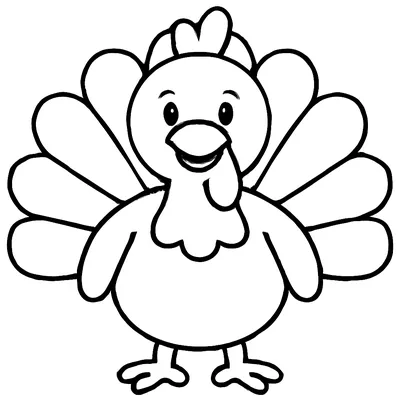
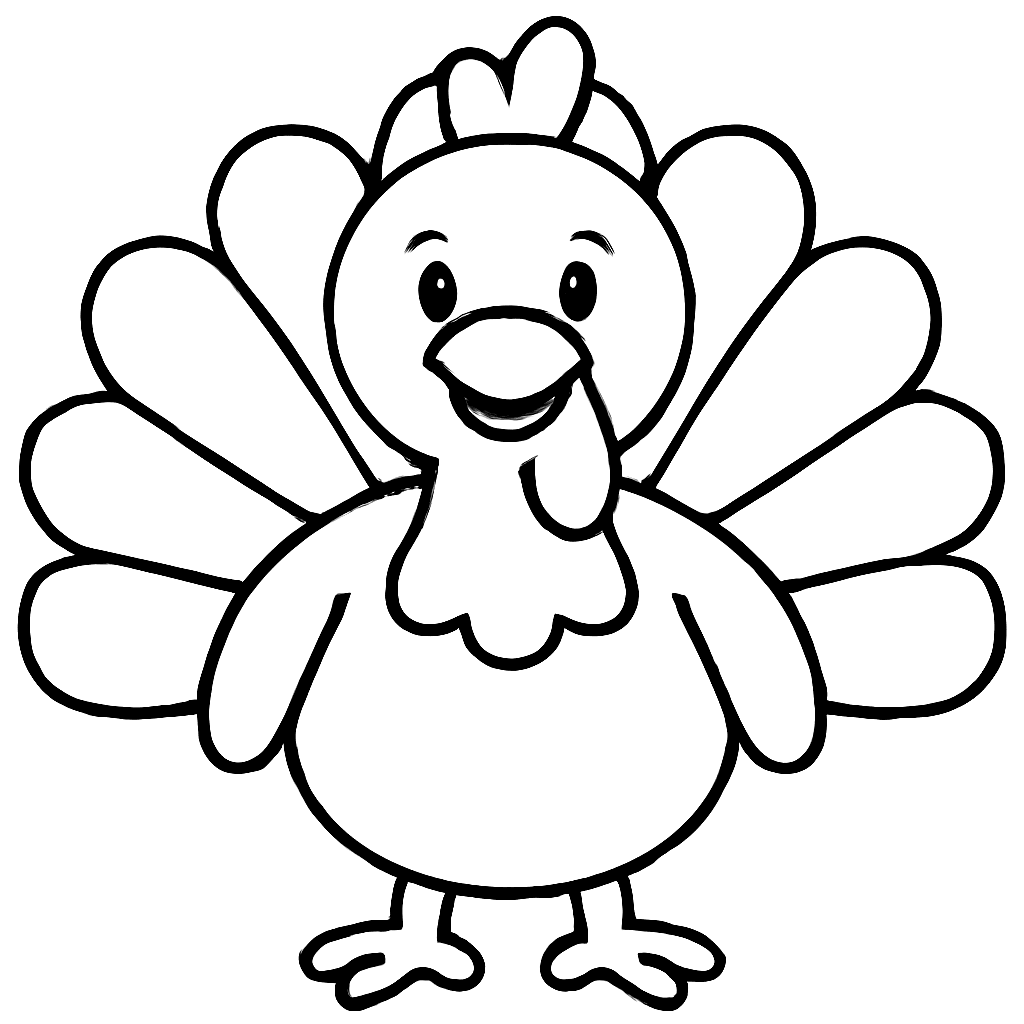
| Ages 2 to 5Simple | a smiling cartoon turkey with a big fan of rounded tail feathers, big simple shapes, black outlines only, no background Each tail feather is one big shape, so even a three-year-old can give every feather its own color. |
|
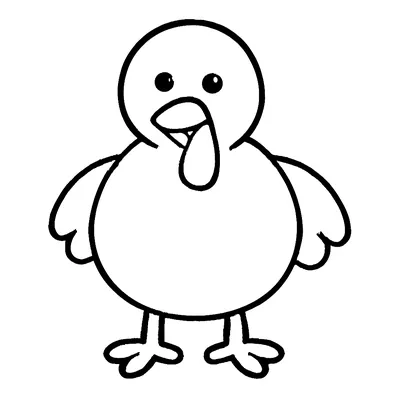
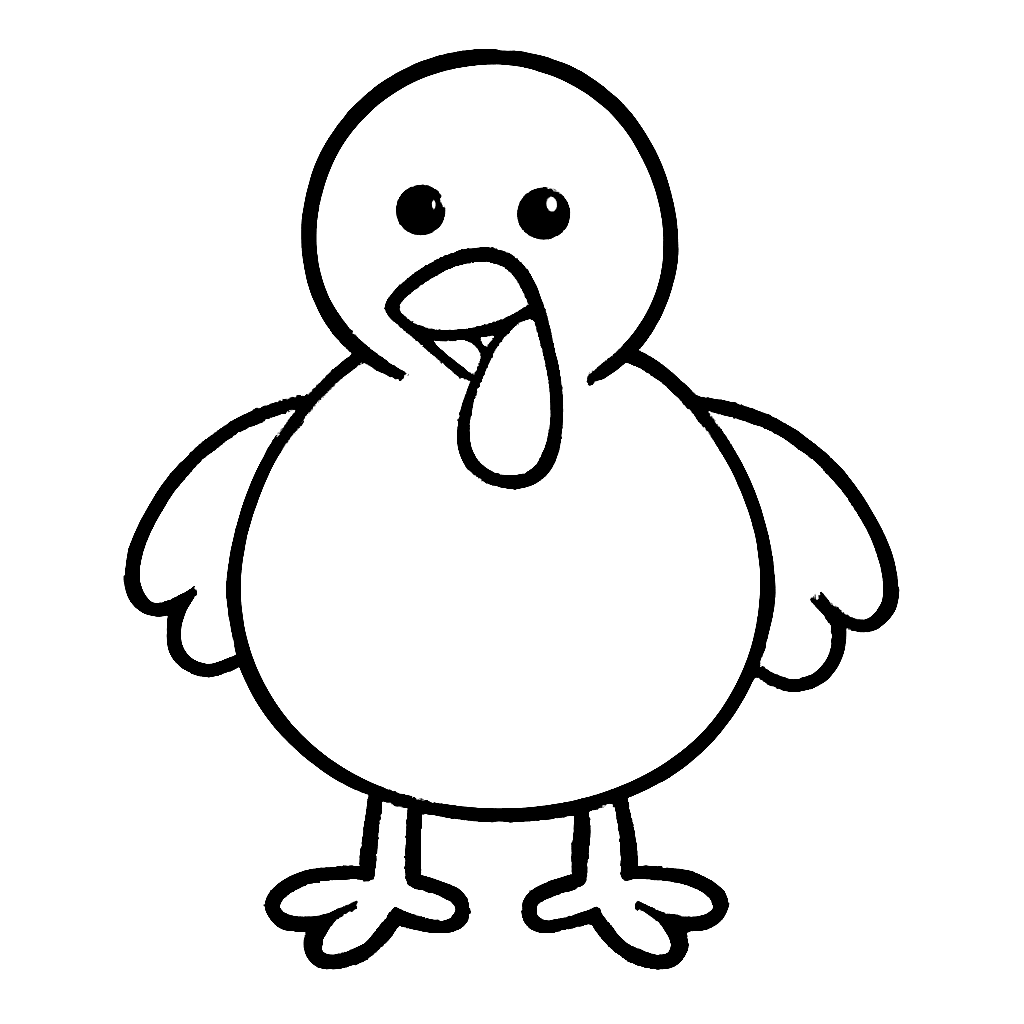
| Fill-in feathersSimple | a smiling cartoon turkey with six big empty feathers fanned out behind it, each feather a plain blank shape, big simple shapes, no background Every feather is an empty shape for a word, a drawing or a color. For a bare turkey body to add paper feathers to, use the example on this page: the generator draws a tail even when you ask for none. |
|
| Ages 6 to 9Medium | a mother turkey and three chicks walking through tall grass, clean bold outlines A family scene, and a chance to show that a turkey hen looks quite different from a male. |
|
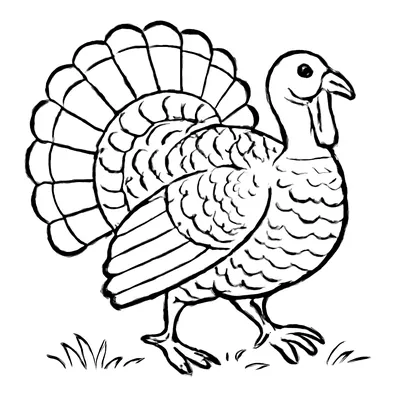
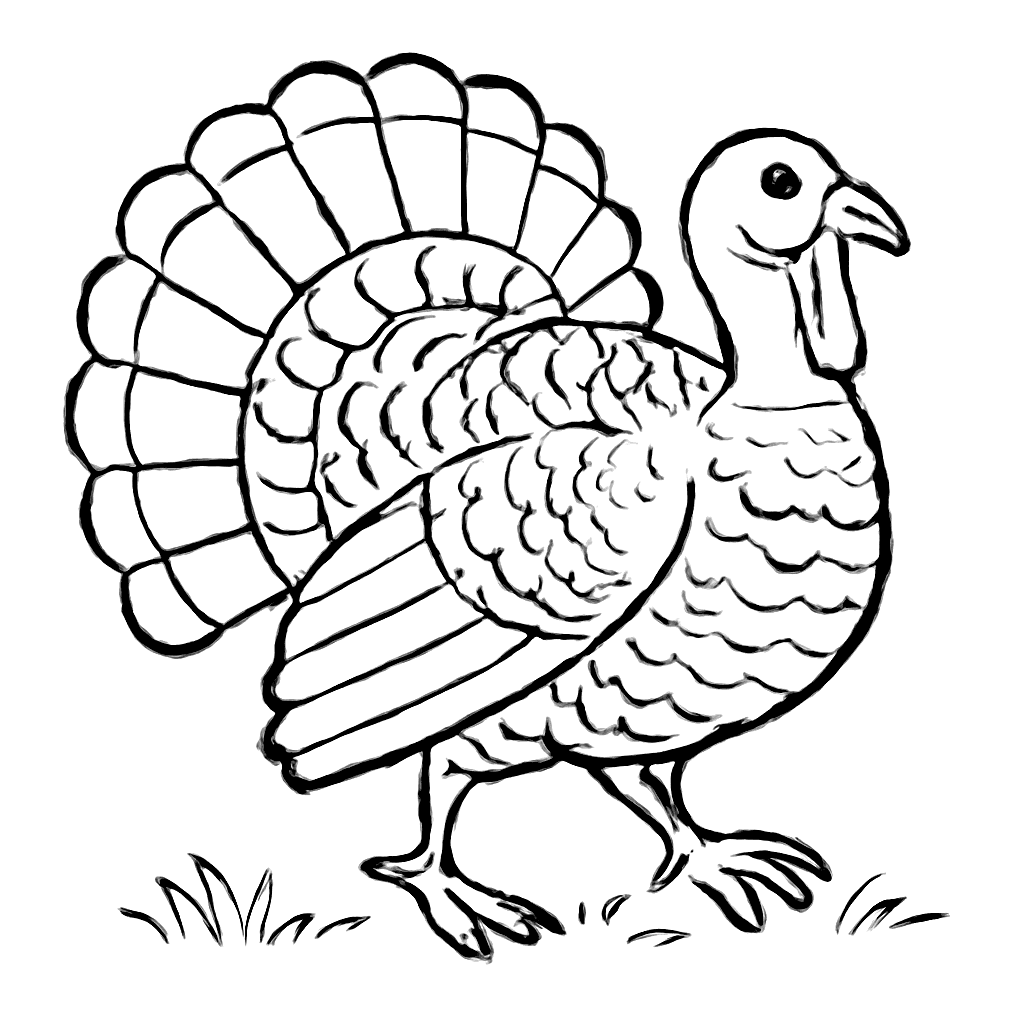
| Ages 9 to 12Medium | a wild turkey strutting on grass with its tail feathers fanned out, each feather a separate outline, clean bold lines, white background Closer to the real bird, with every feather drawn as its own shape. |
|
| Teens and adultsMedium | a wild turkey at the edge of a forest in autumn, each feather on its wings and fanned tail drawn as a separate outline, clean bold lines Hundreds of feathers to fill with bronze, copper and brown. |
The add-your-own-feathers turkey
Many families and classes make a turkey in November by starting from a bare turkey body and adding the feathers themselves. The page without feathers above is made for that.
- Paper feathers. Cut feather shapes from colored paper and glue them in a fan behind the body.
- Handprint feathers. Trace each child's hand on colored paper, cut the hands out and use the fingers as feathers.
- Thankful feathers. Write one thing to be thankful for on each feather before gluing it on. It pairs well with the thankful tree.
- Disguise a turkey. Some schools send home a turkey to disguise as something else, so it will not be eaten at Thanksgiving. Start from the same page, printed at full size, and dress it as a pumpkin, a firefighter or a scarecrow.
Cartoon or realistic
| Style | Words to use | Ages |
|---|---|---|
| Cartoon | smiling, round, big tail feathers, simple shapes | 2 to 6 |
| Storybook | turkey family, pumpkin patch, scarf and boots | 5 to 9 |
| Realistic | wild turkey, strutting, each feather as a separate outline | 9 and up |
For realistic pages, ask for each feather “as a separate outline”. Words such as texture or shading pull the drawing toward gray strokes that print muddy.
Wild turkey facts for the classroom
- Turkeys are native to North America. Indigenous people in southern Mexico and Central America domesticated them about 2,000 years ago (Missouri Department of Conservation).
- Adult males have a bare red and blue head with red wattles on the throat and neck, and bronze, shiny feathers. Males, and some females, have a tuft of hairlike feathers on the breast called a beard.
- In spring, males gobble and strut for females, spreading their tails like a peacock. In winter, turkeys gather in flocks.
Those colors make a good color-by-fact page: red and blue for the head, bronze and copper for the feathers, and a dark tuft for the beard.